Gators, Cypress Knees, and Slow-Moving Secrets
Louisiana is famous for its uniqueness in many categories, be it culinary, cultural, musical, or natural beauty. With its diverse and intricate landscape, the state boasts over 53,000 miles of bayous, cypress-tupelo swamps, and slow-moving rivers. Many people say these waterways are mystical and filled with Cajun folklore and Native American legends. There’s even a “Myths and Legends Byway” that stretches for 181 miles throughout the state. Explore it by car or by water, and learn of true stories, ghosts, and tall tales dating back to the time of the land pirates and outlaws.
https://byways.explorelouisiana.com/byway/myths-and-legends-byway
Louisiana Bayou or Swamp: What’s the difference?
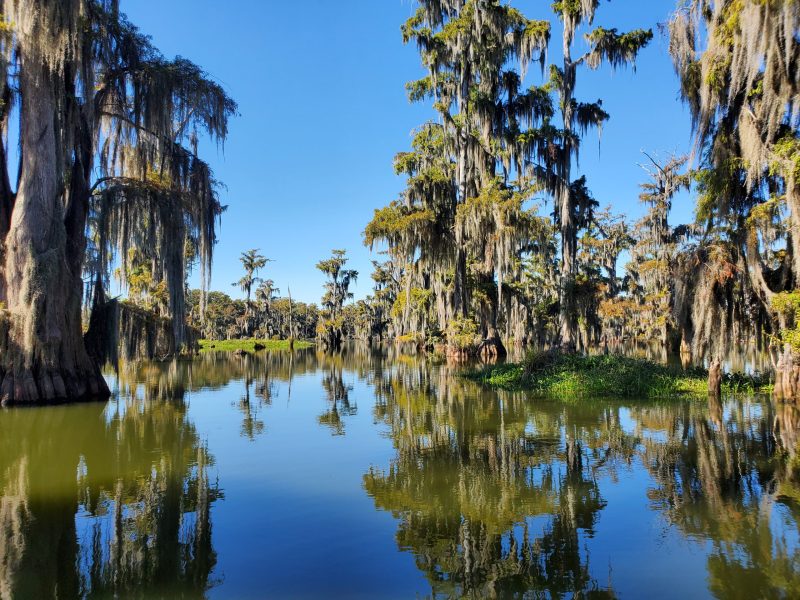
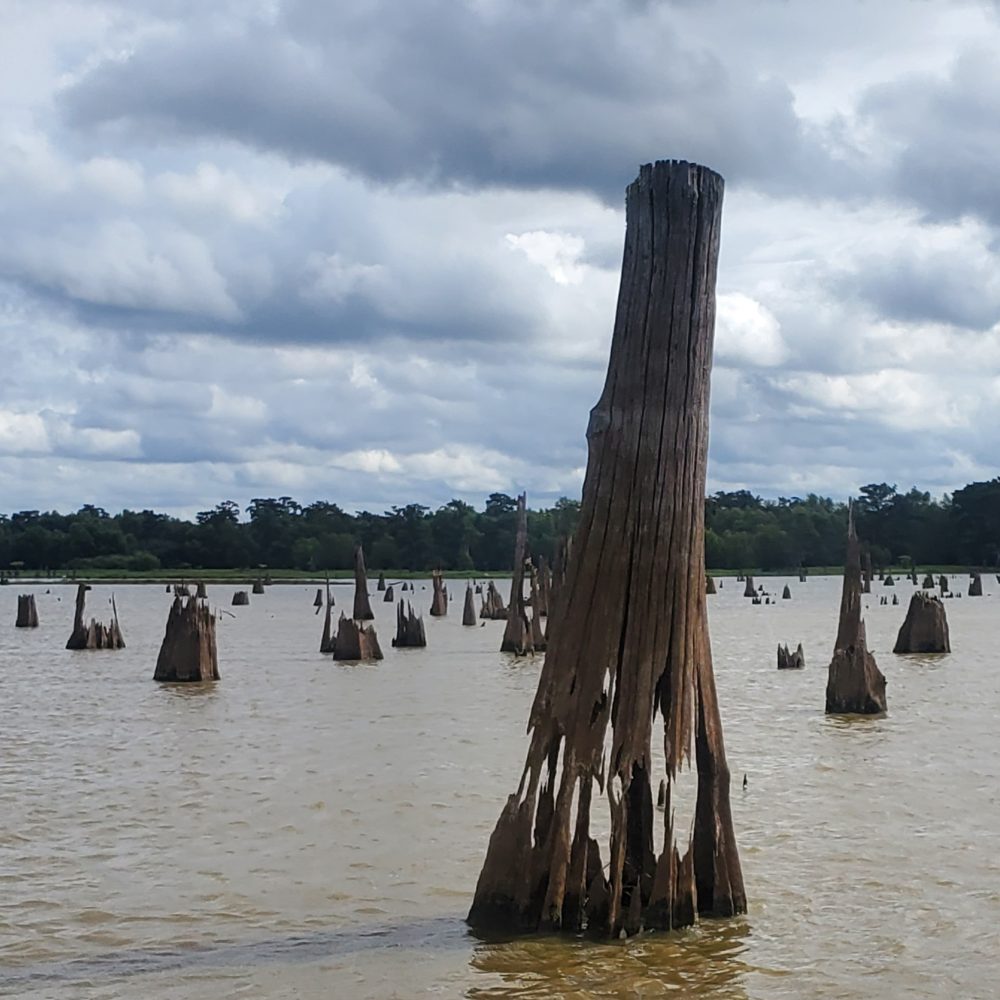
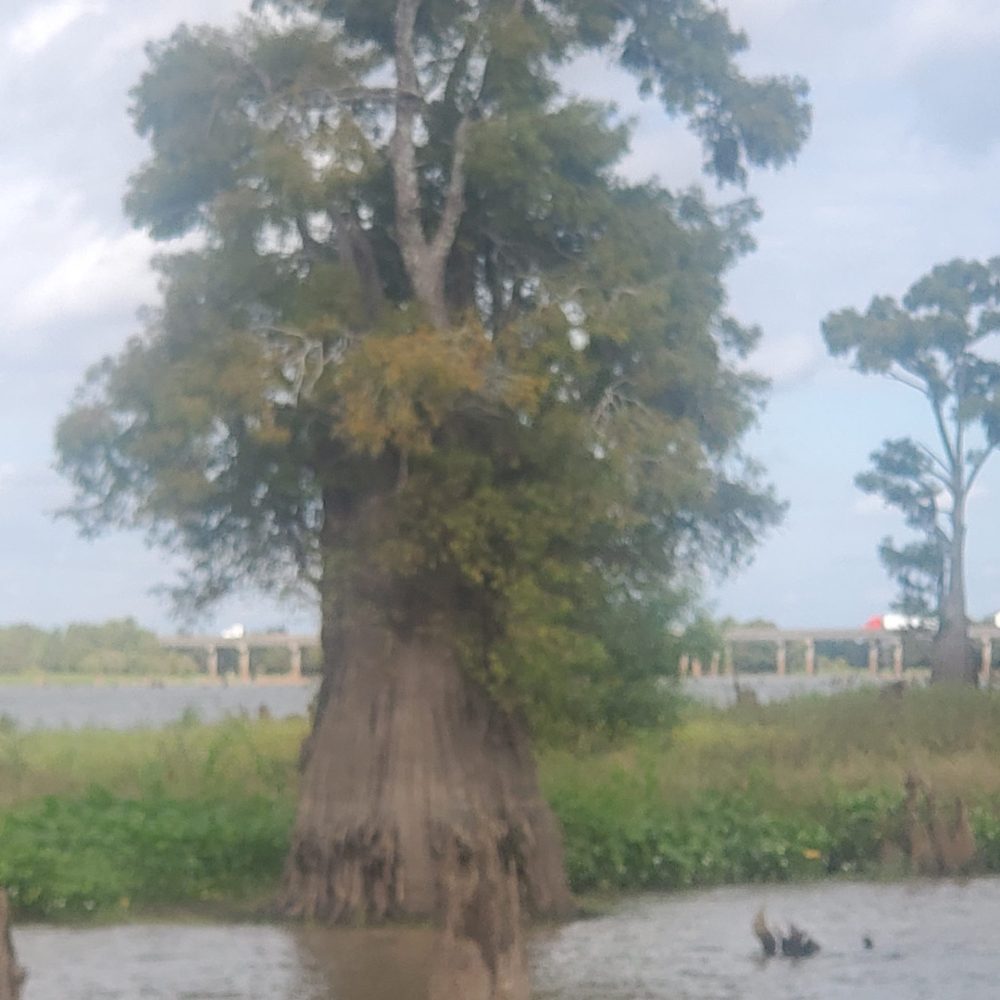
Bayous and swamps share similarities in that they are slow-moving aquatic environments that often coexist in the same geographic area. They both support lush vegetation like Cypress trees (although many are just stumps now, since they were harvested many years ago for crate boxes, and eventually the beautiful and exotic wood was used in the interior of cars) and Spanish moss.
“While both are types of wetlands, they are distinct ecosystems—a bayou is generally a slow-moving, meandering stream or creek, whereas a swamp is often a deeper, permanently saturated wetland dominated by trees.”
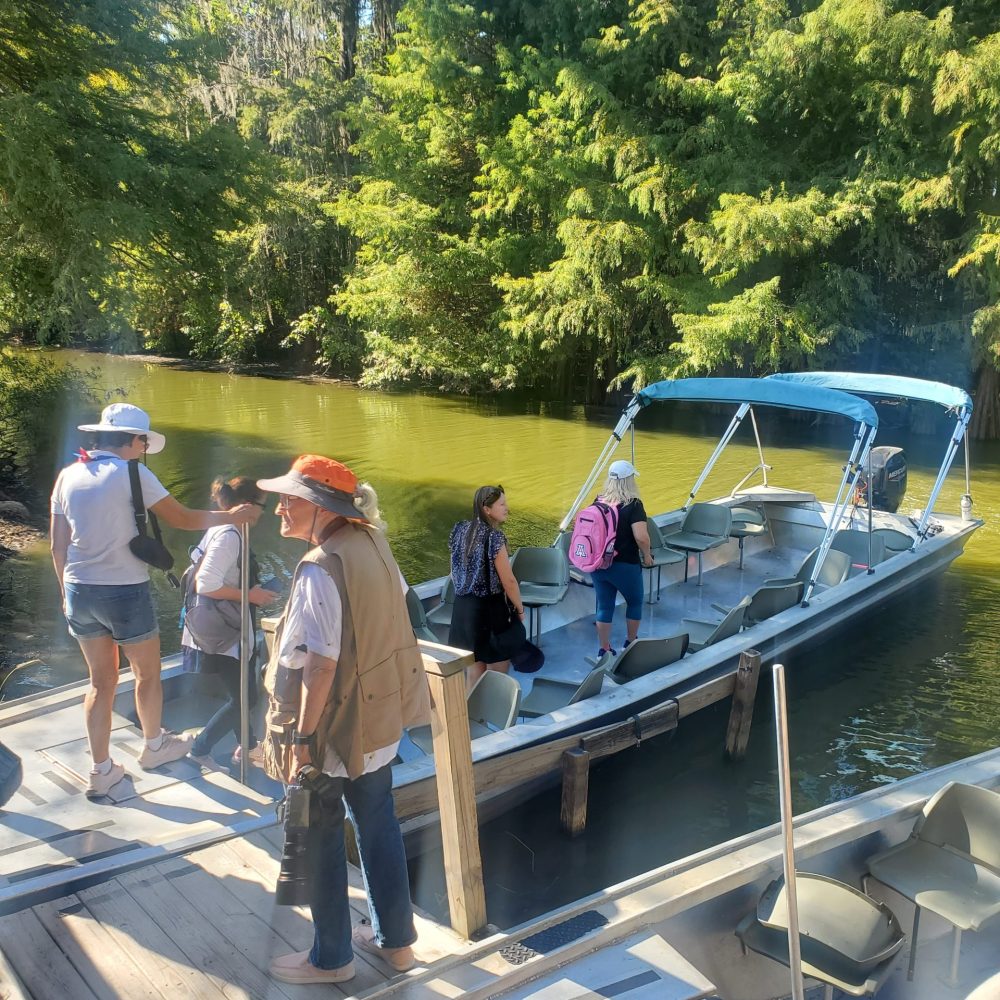
A boat tour on Lake Martin (a swamp)
I visited both a bayou and a swamp on my trip to Lafayette.
First the Swamp
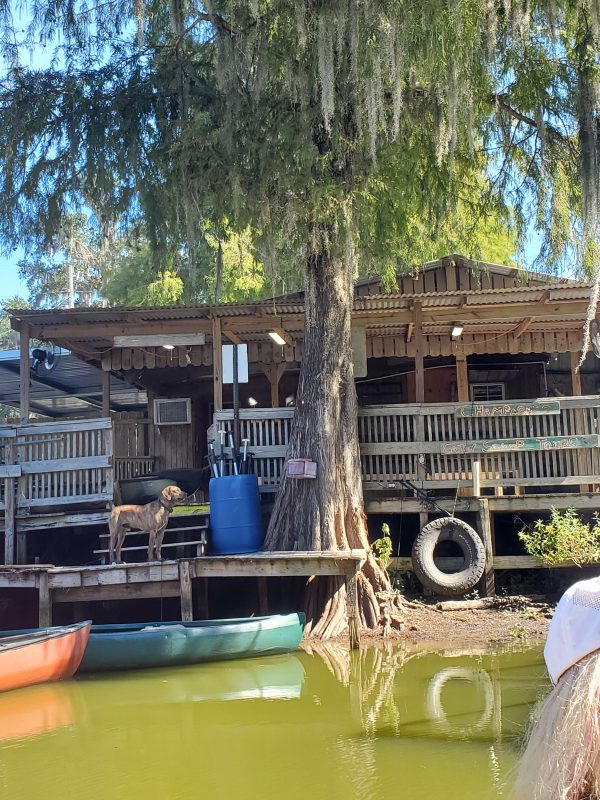
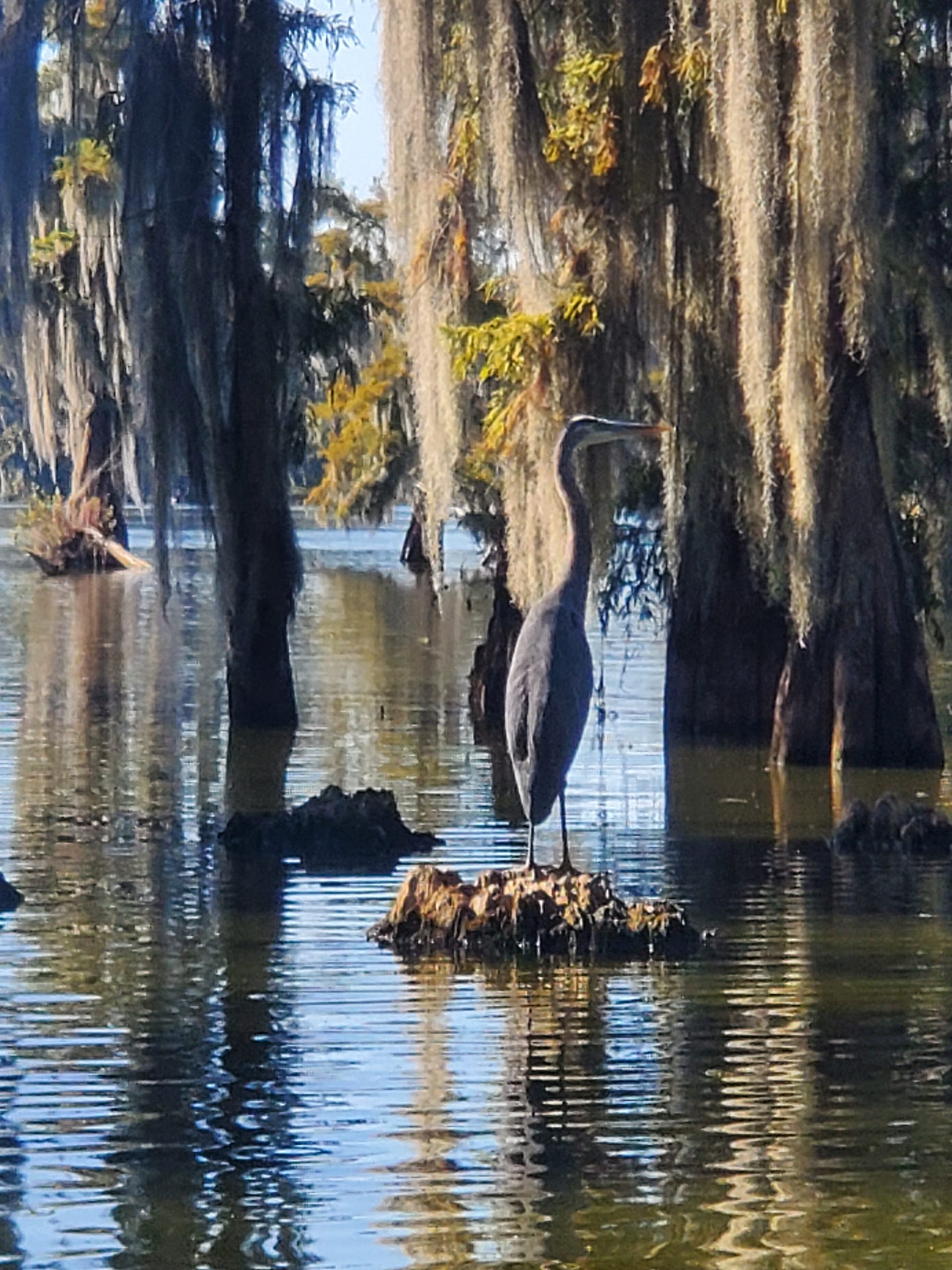
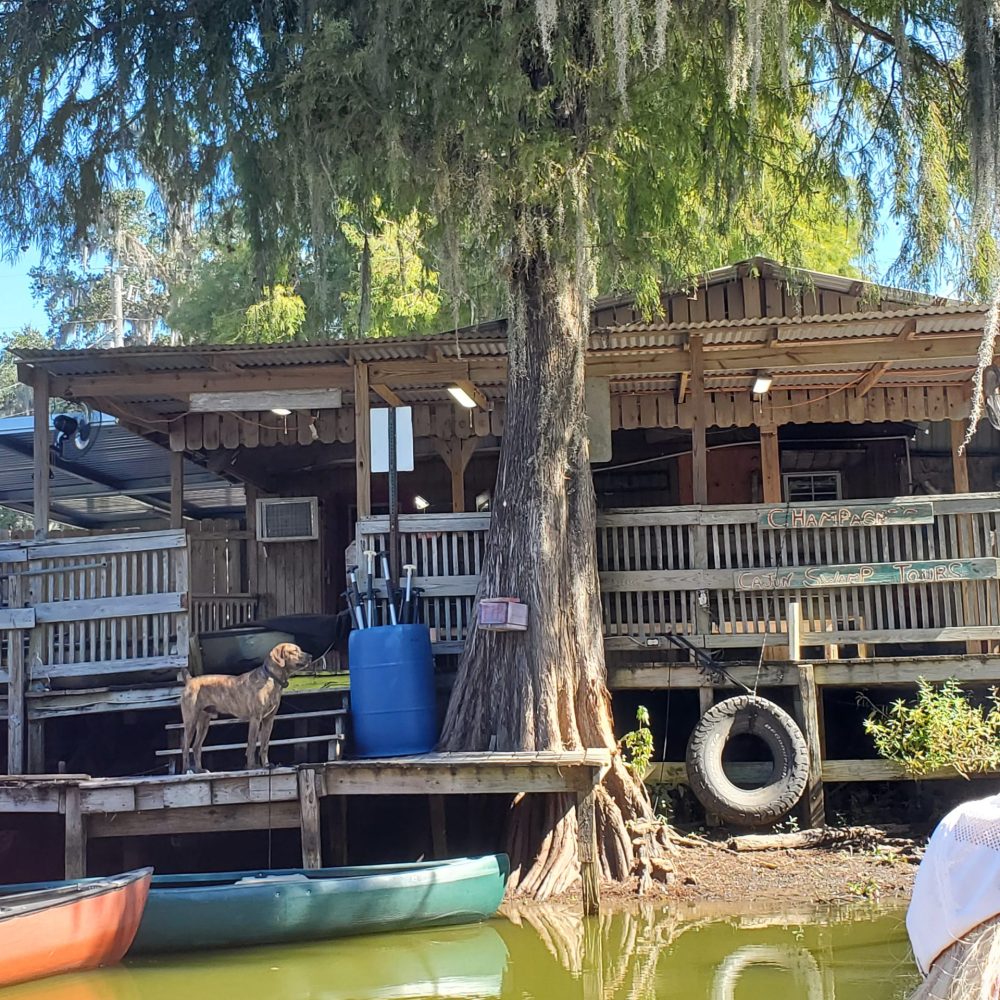
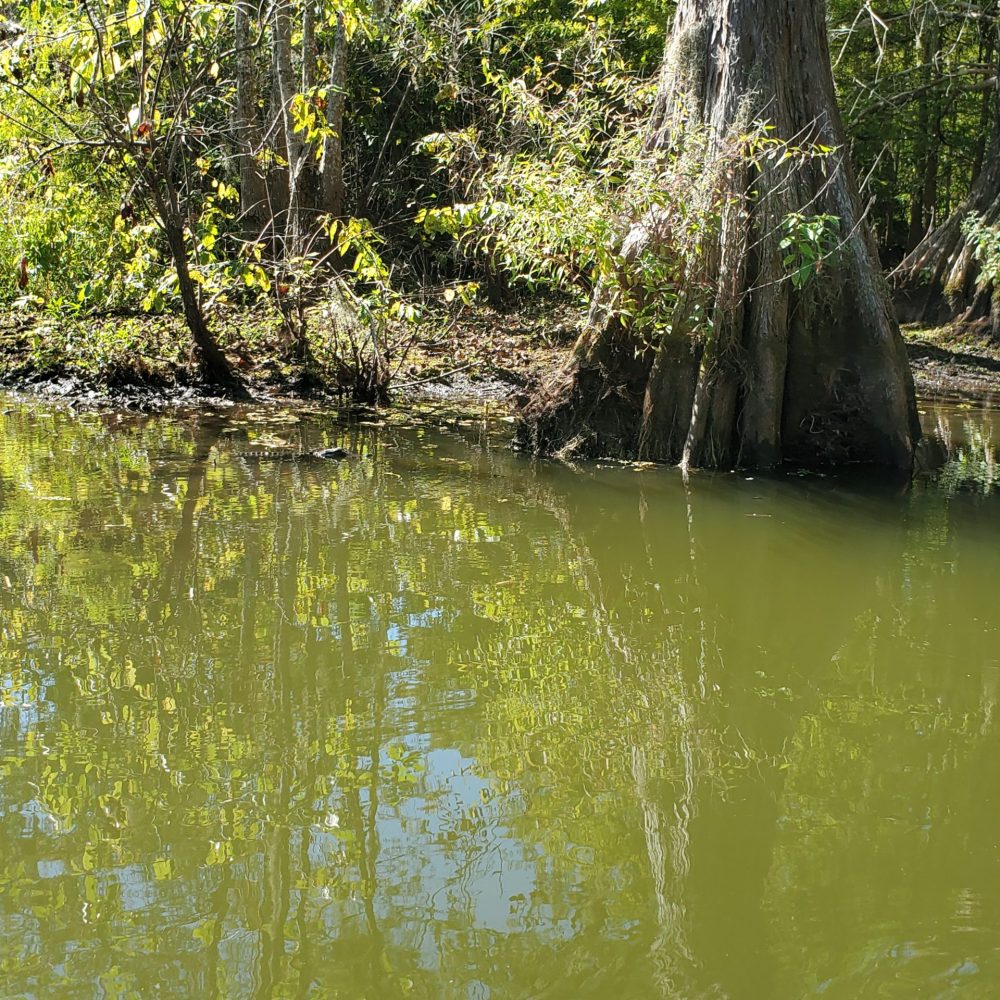
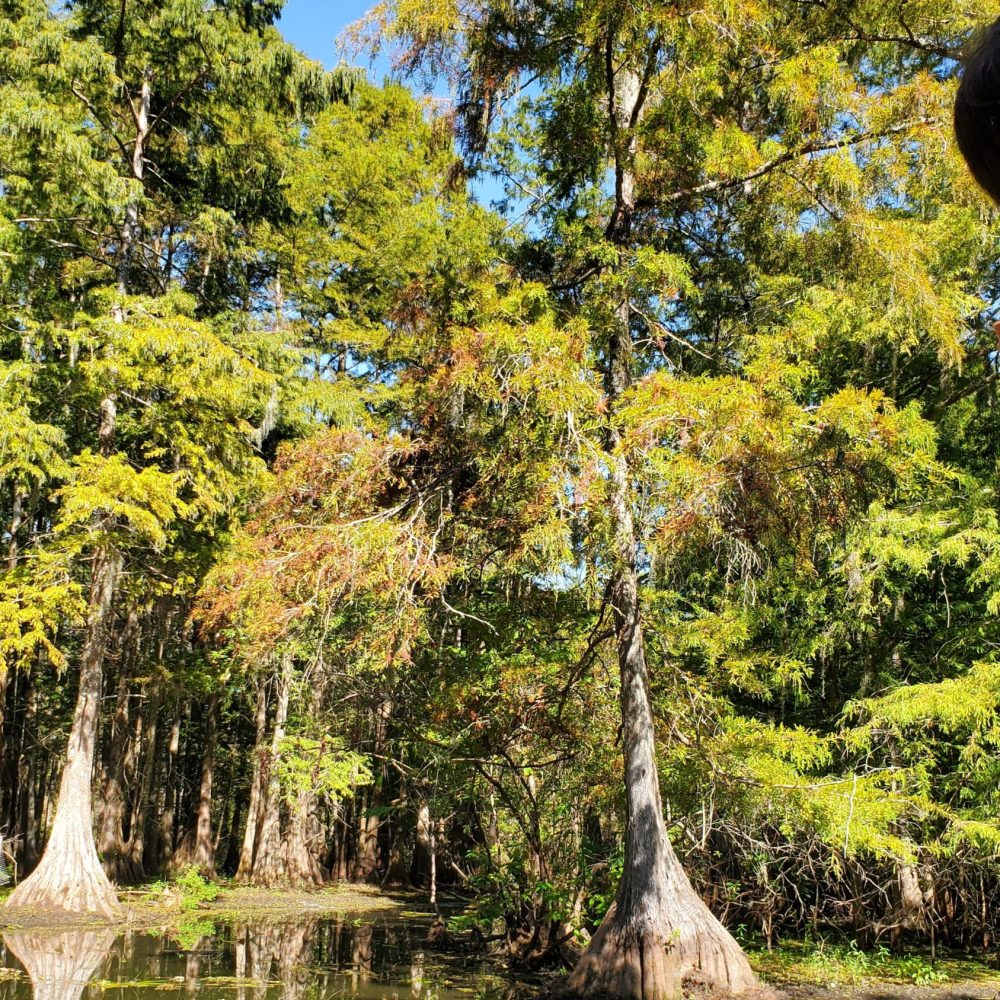
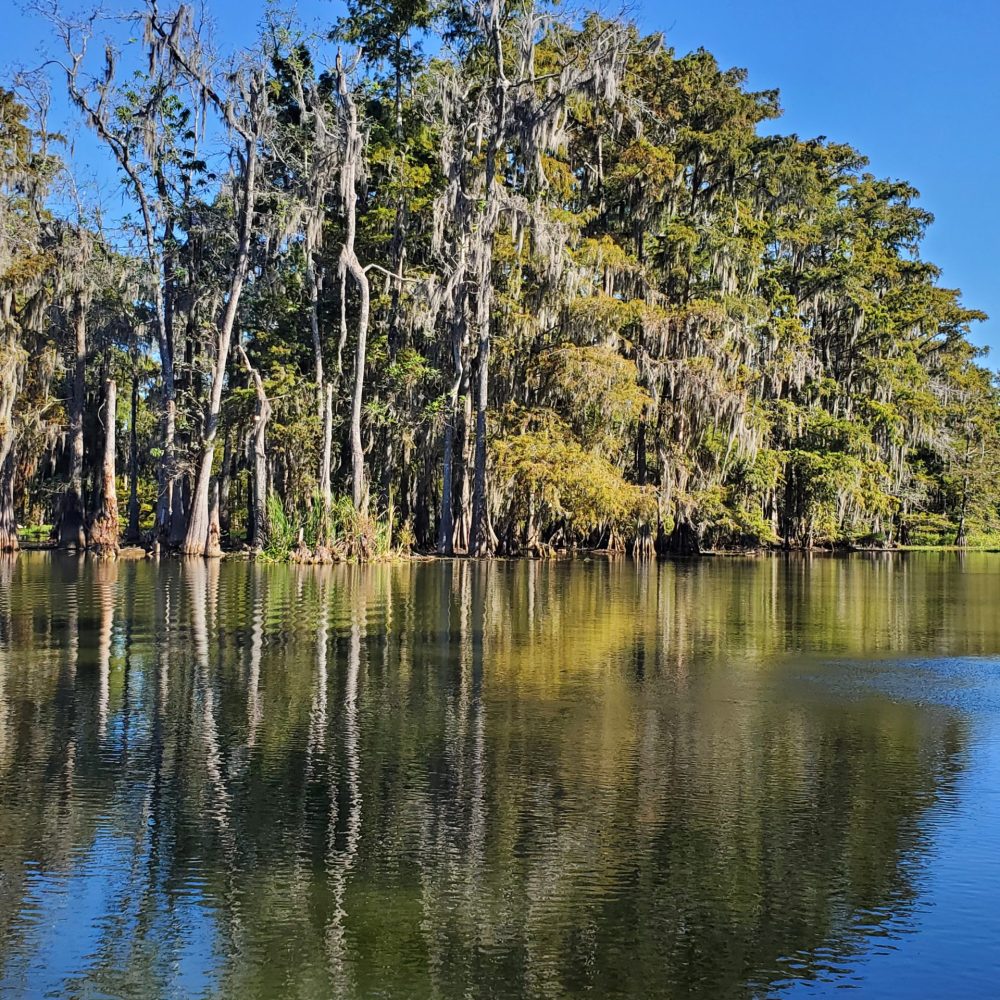
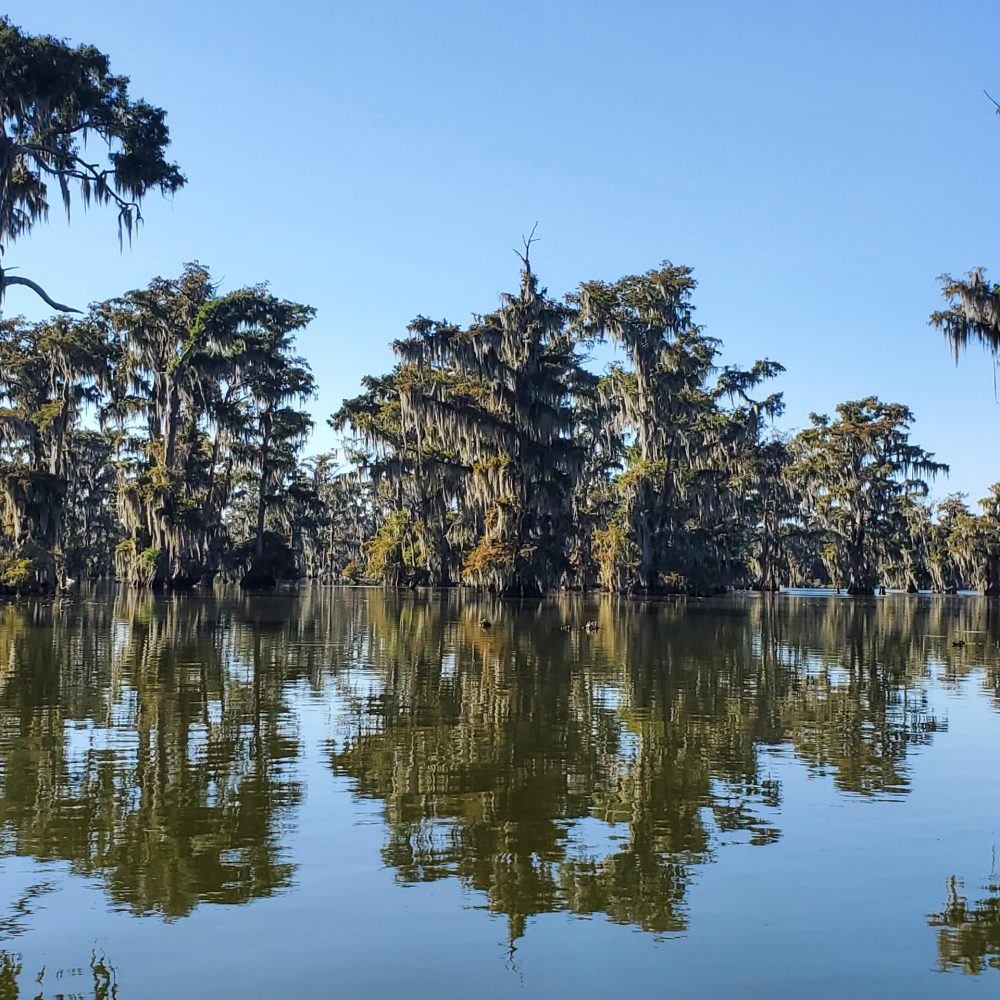
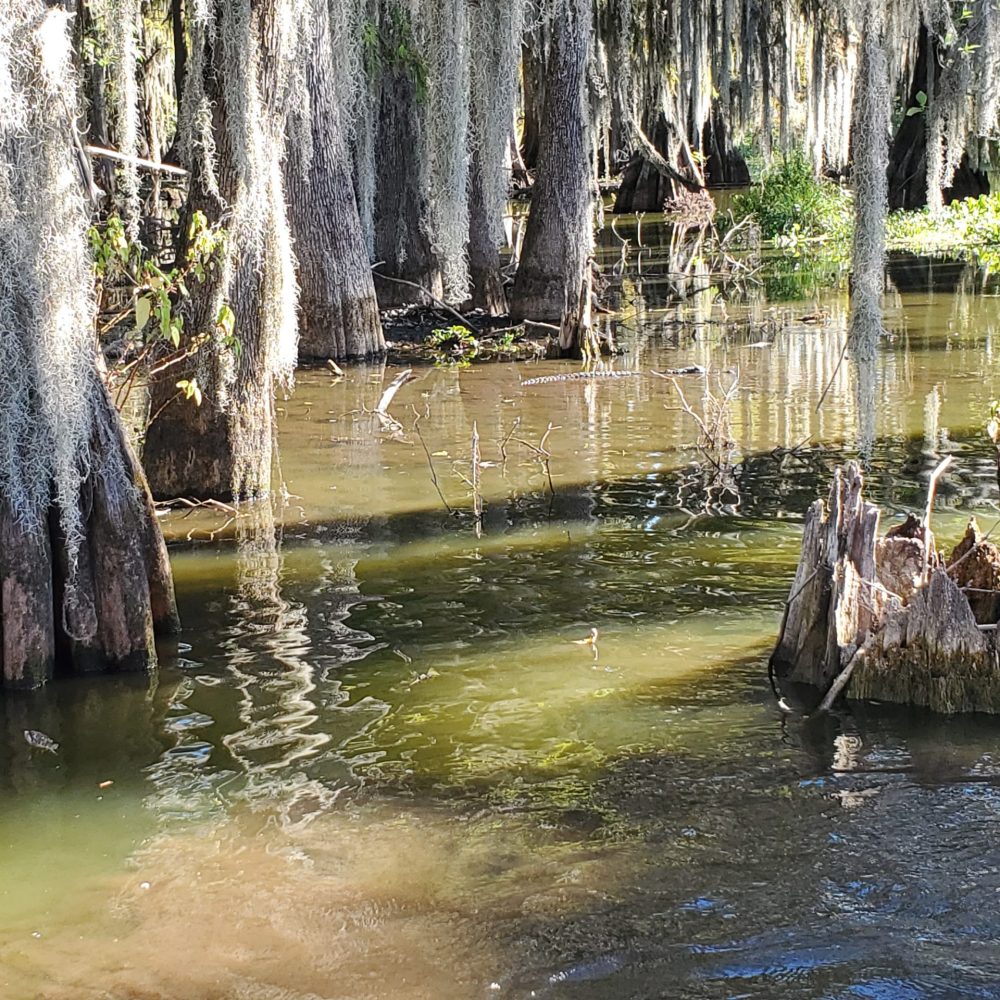
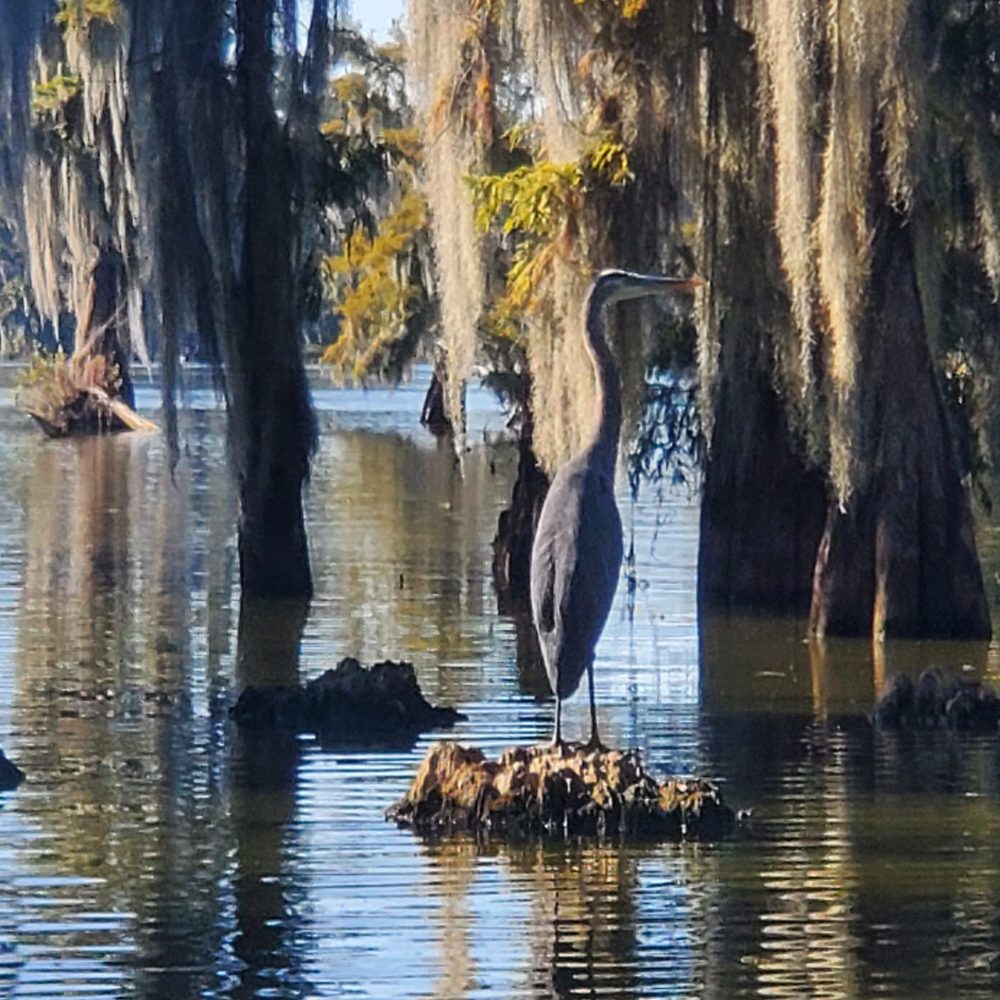
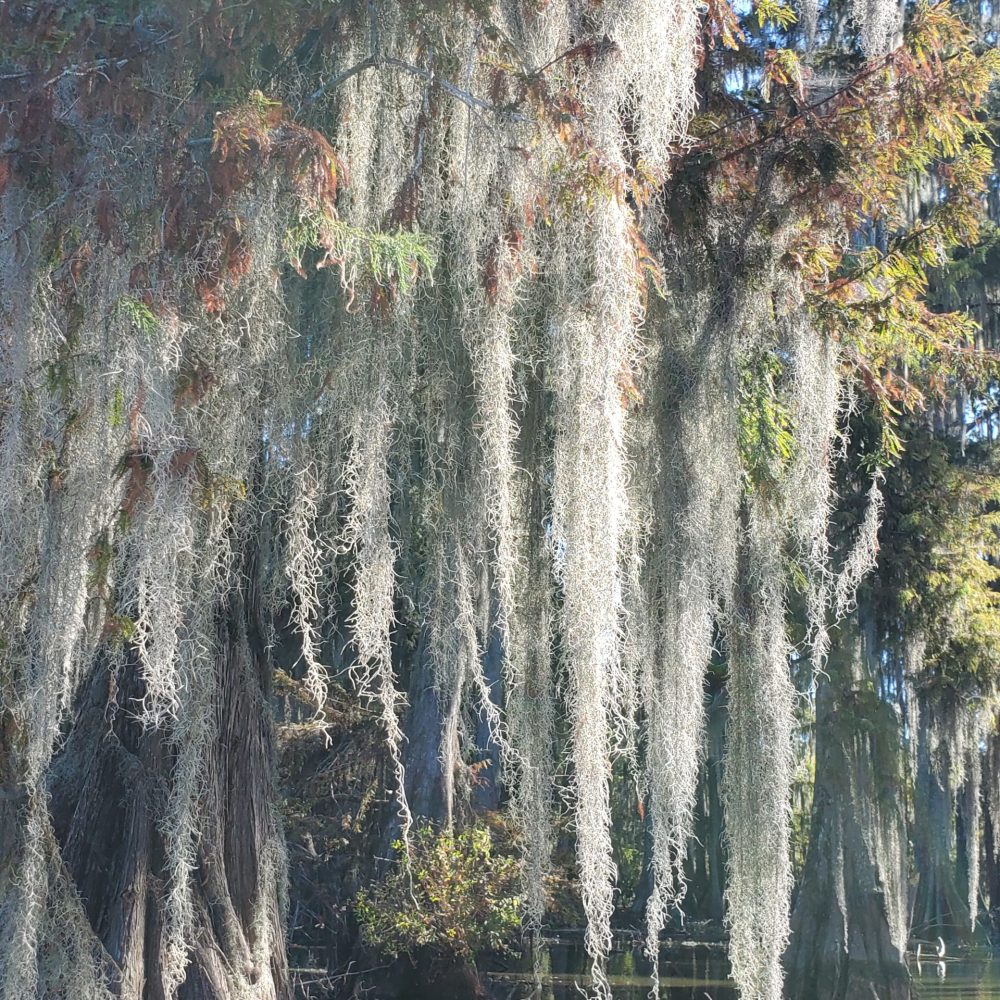
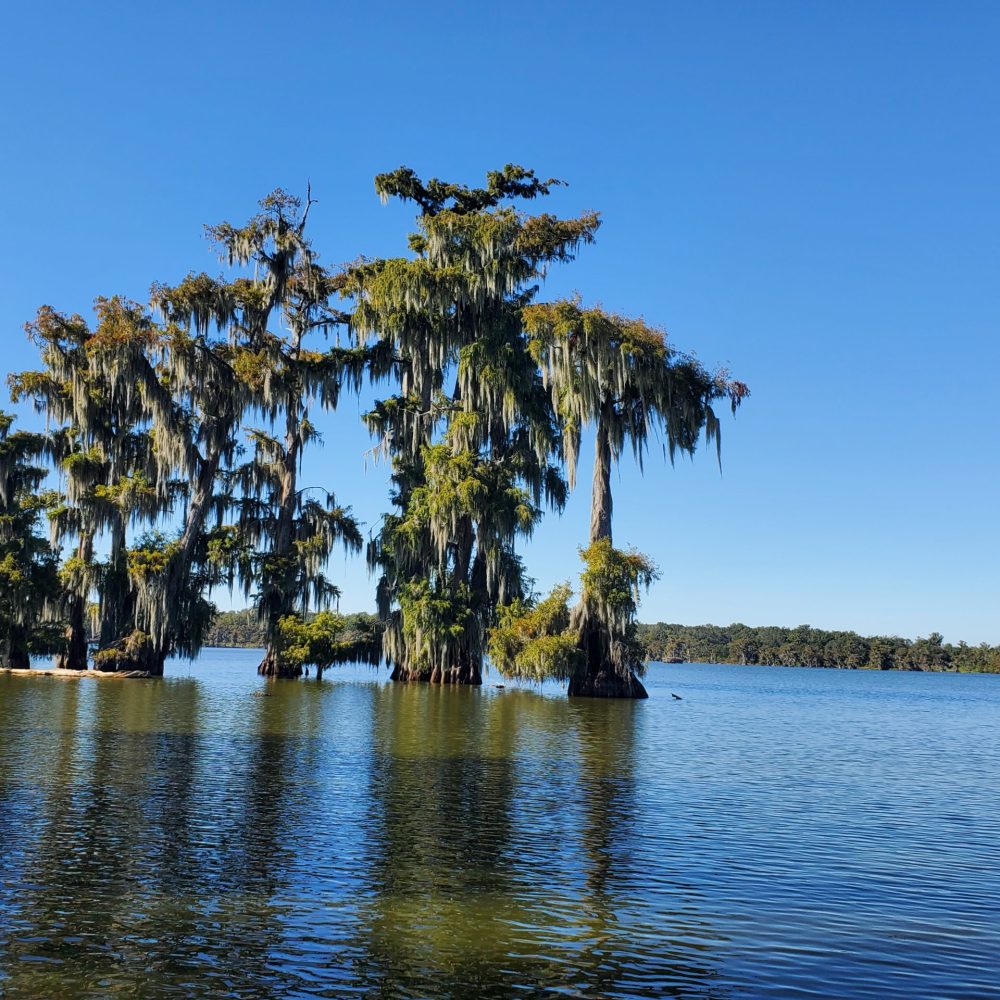
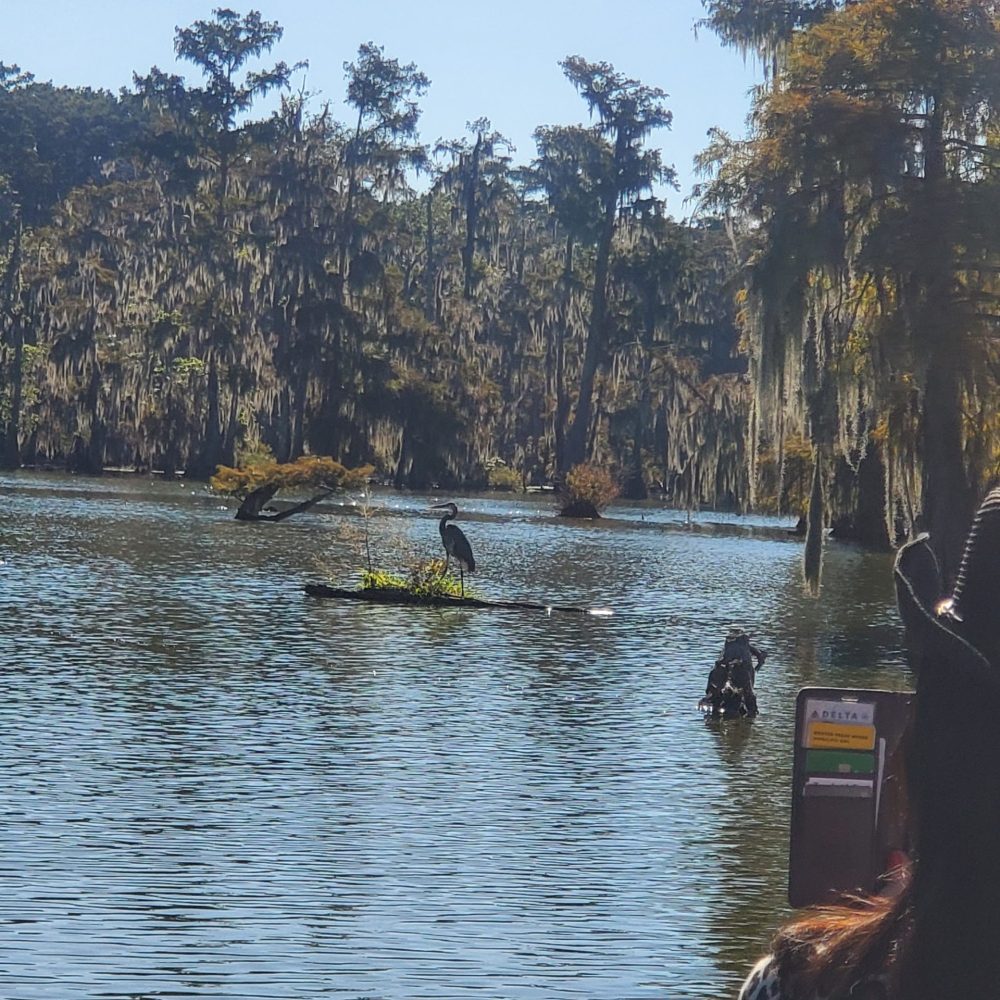
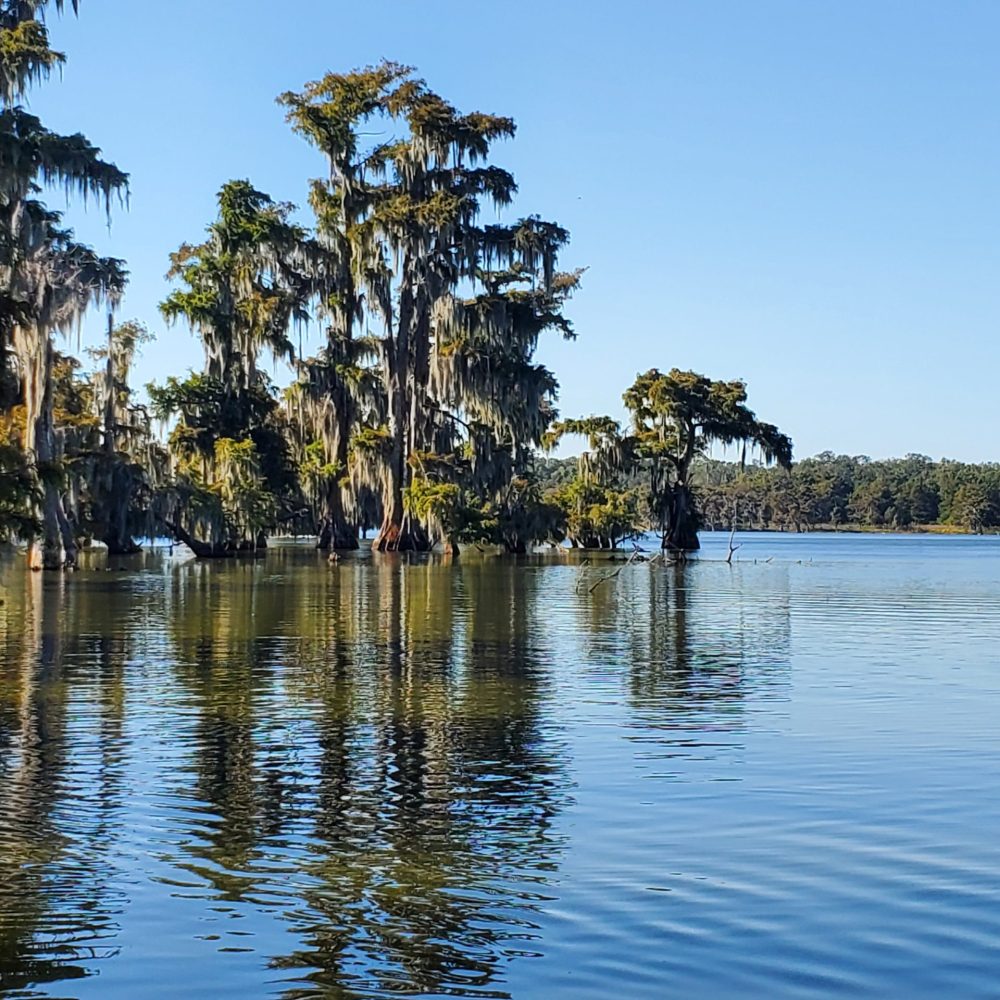
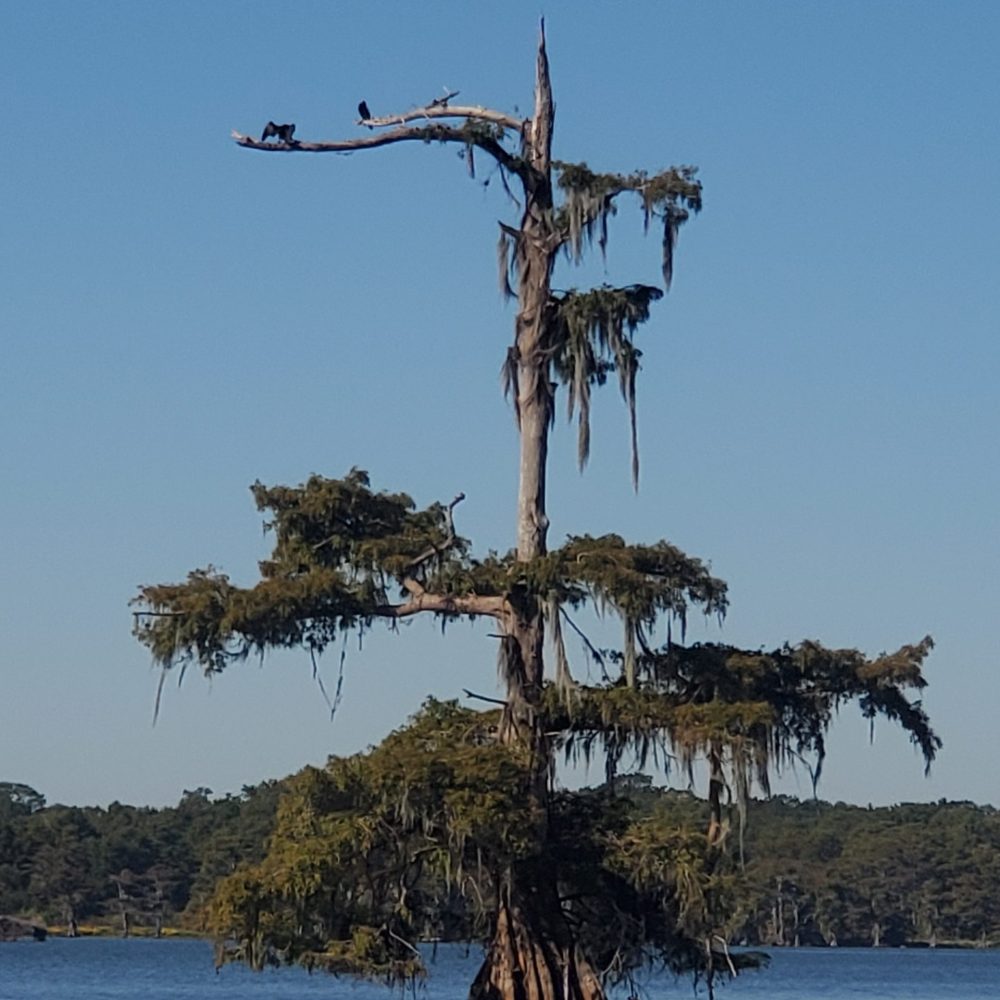
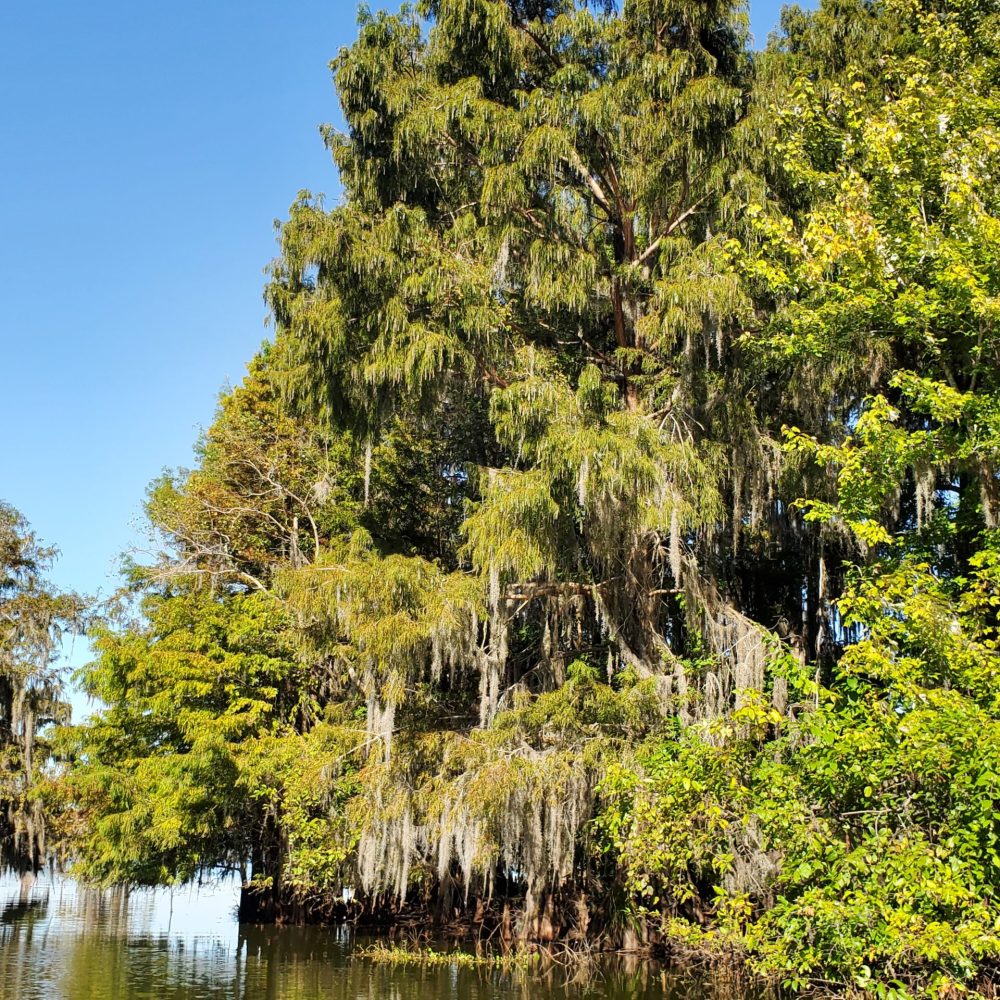
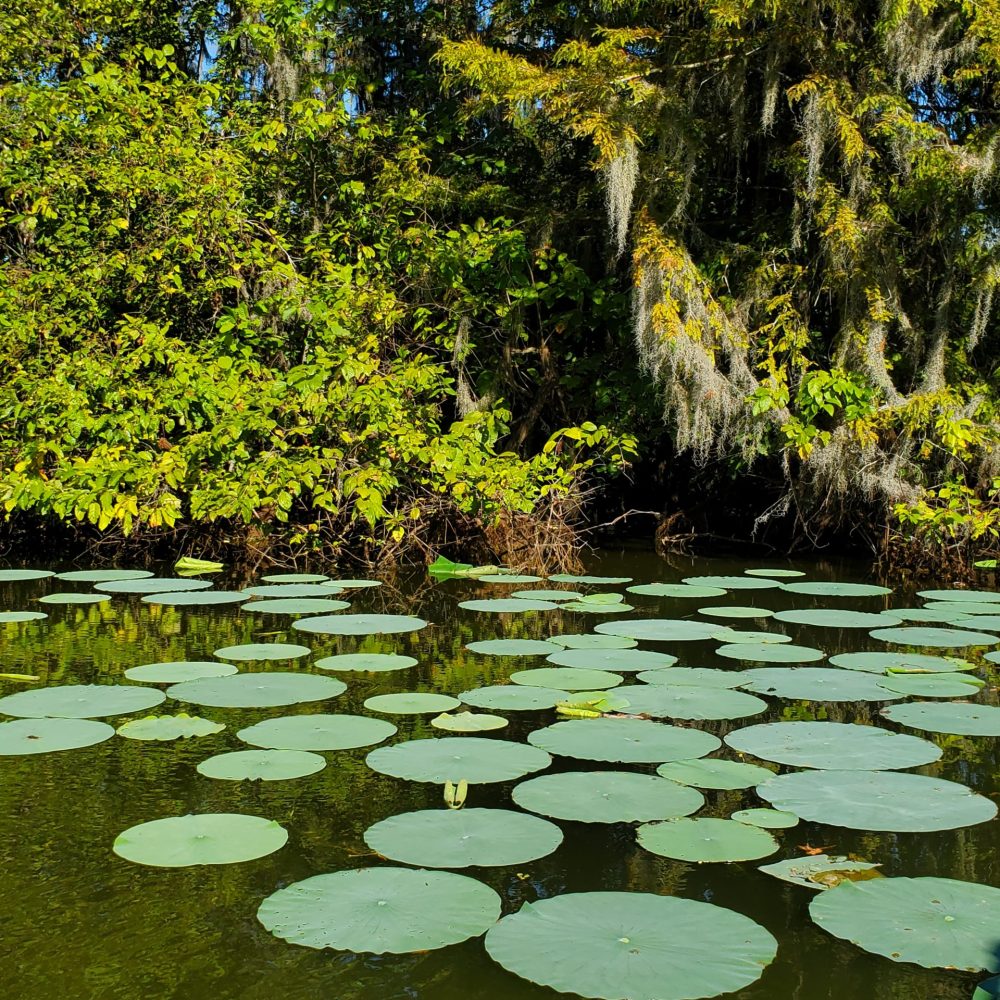
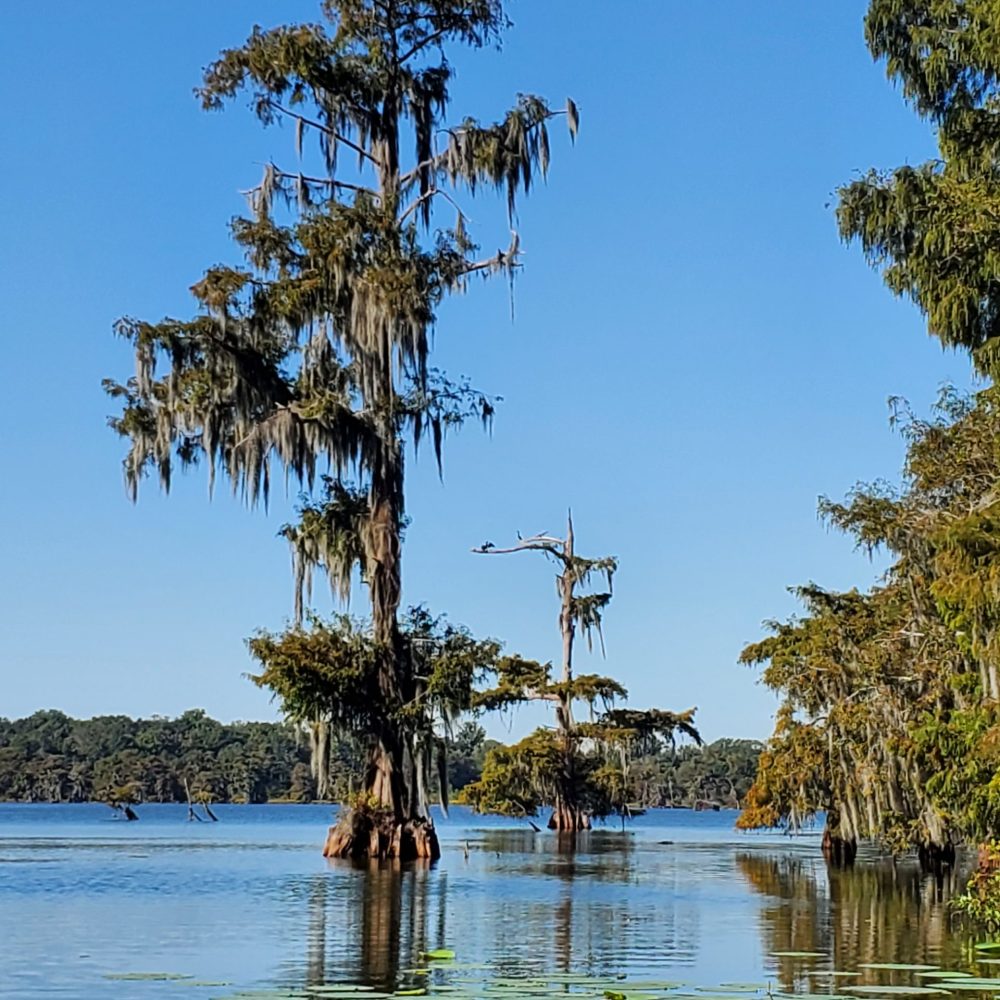
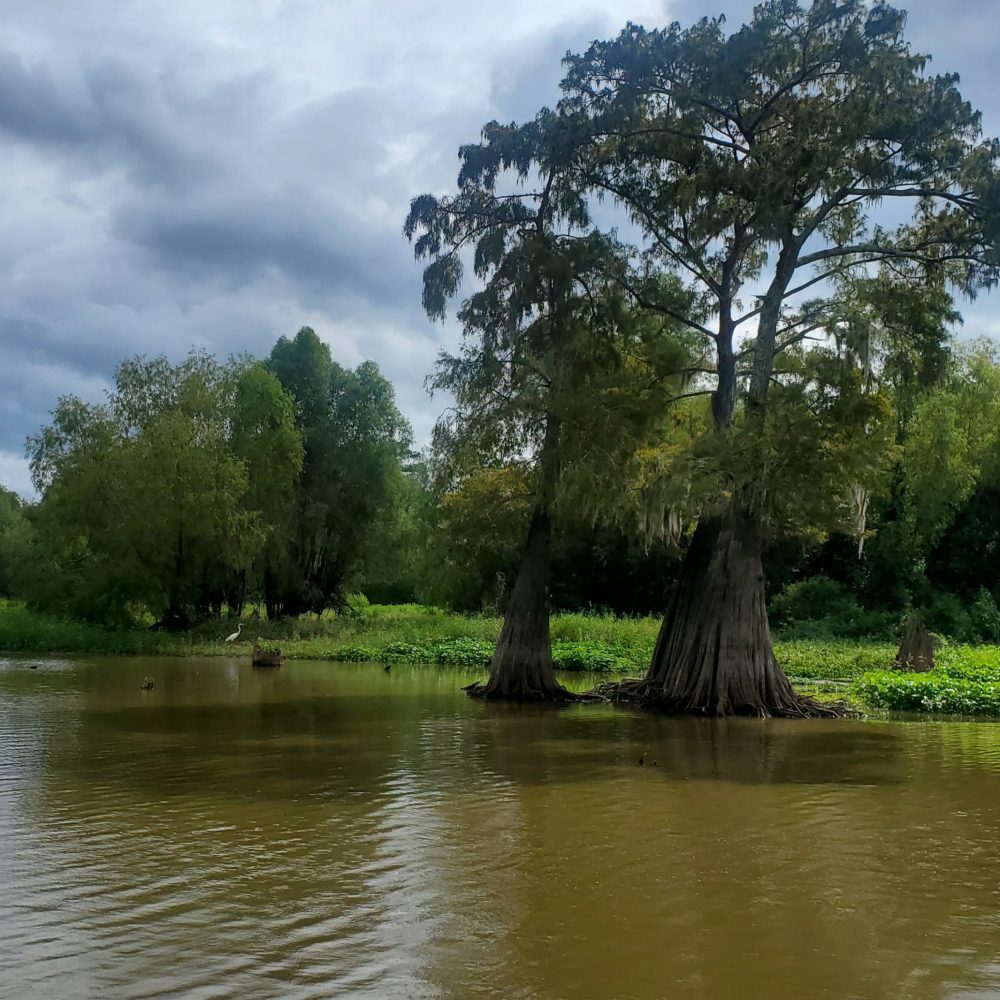
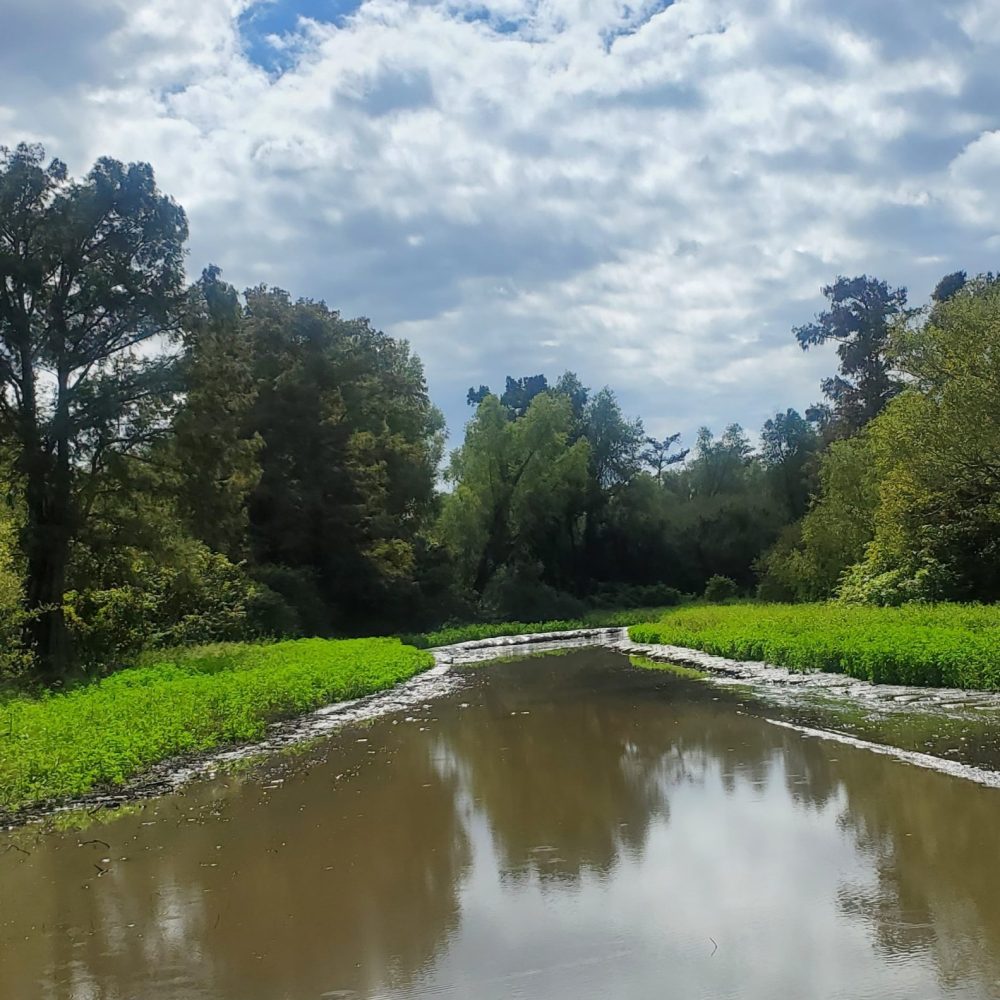
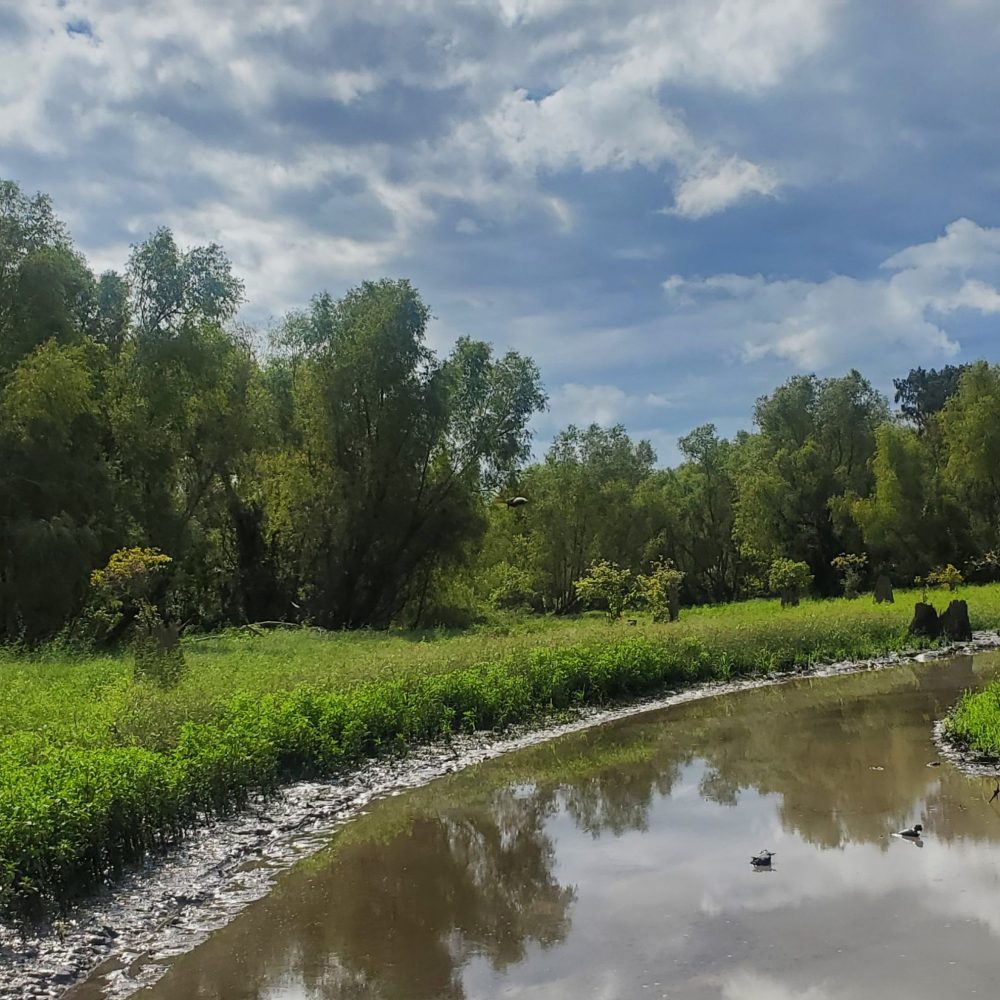
I took a boat tour on Lake Martin, a major wildlife preserve located near Breaux Bridge and Lafayette. It is locally renowned as a Cypress-tupelo swamp with a picturesque landscape (I took a multitude ofphotos!). Here you can view alligators, a variety of birds (such as snowy egrets, herons, and nutria), and majestic Cypress trees.
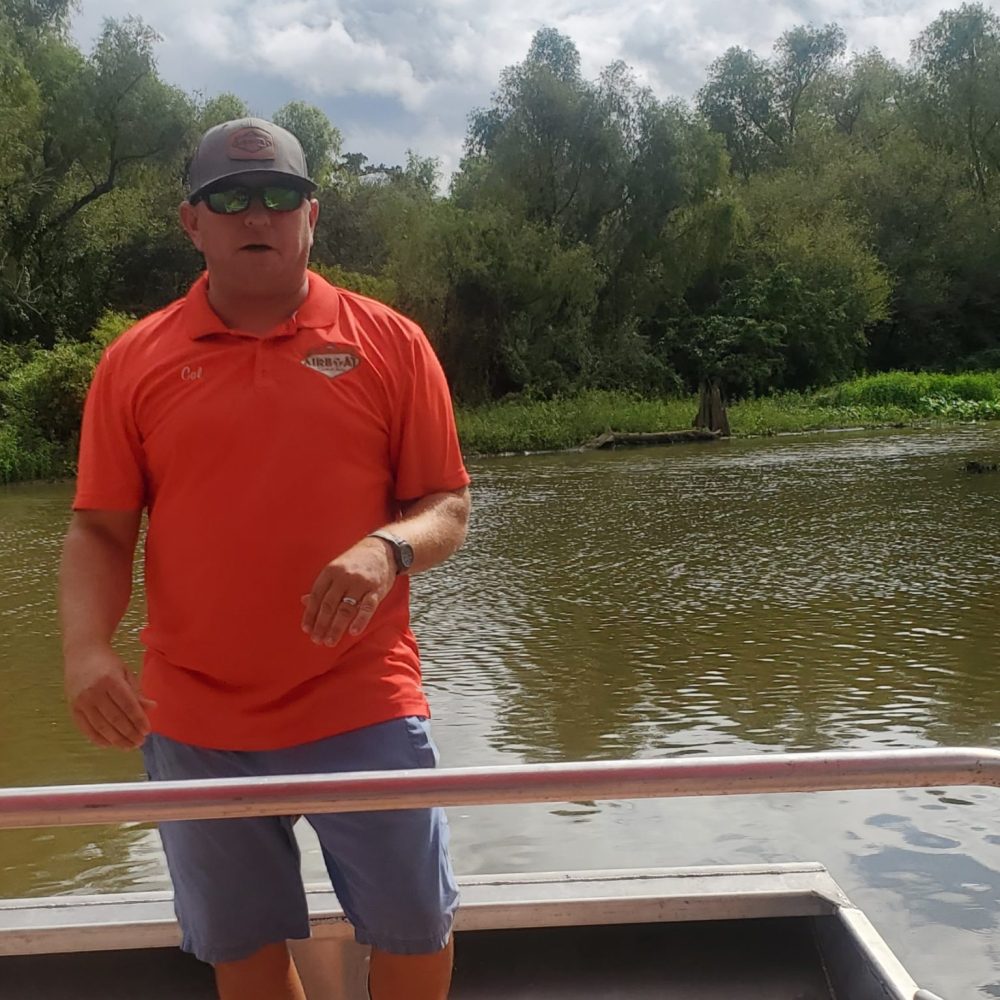
Our guide explains more about Lake Martin
Bayou
The Atchafalaya Basin, located immediately east of Lafayette, Louisiana, is a vast, swampy landscape full of “eerie sounds and ancient, massive trees. It is the nation’s largest river swamp and extends 18 miles to Baton Rouge to the east. The basin is brackish water due to flows from the Red River, the Mississippi River, and the Gulf of Mexico.
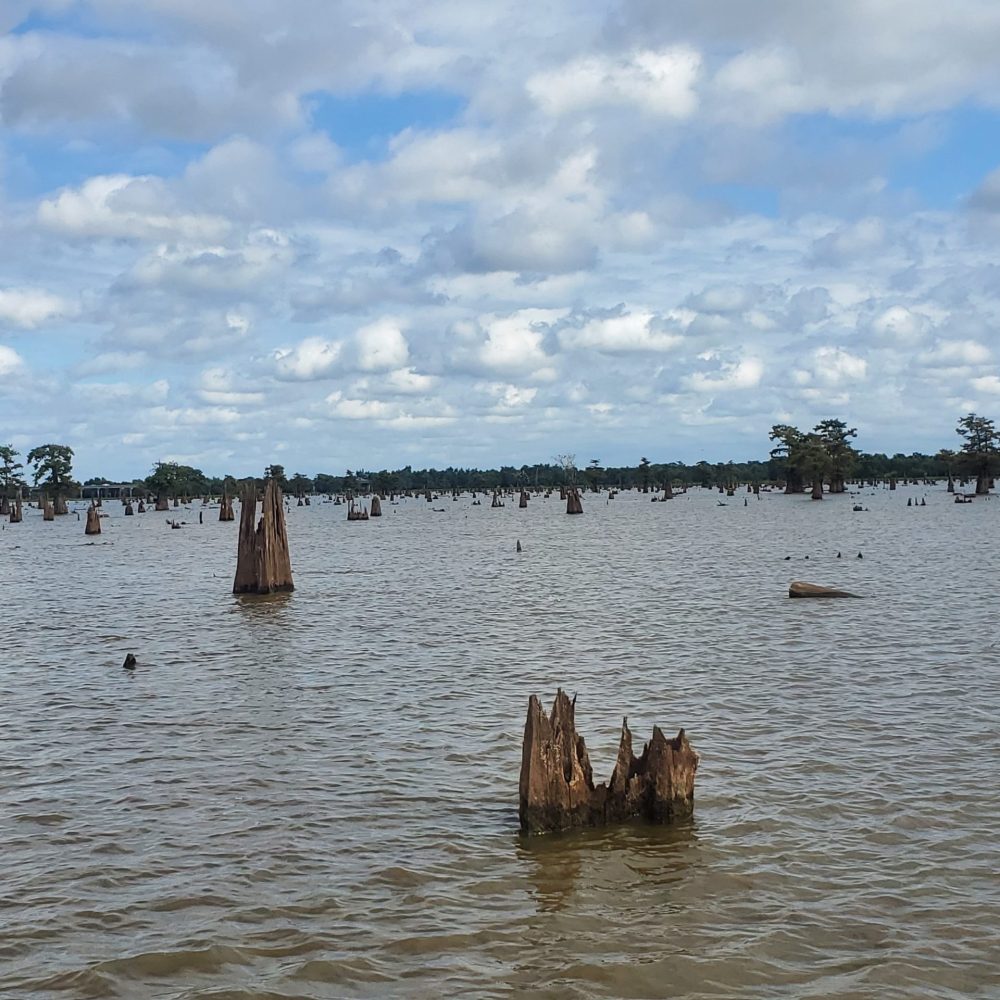
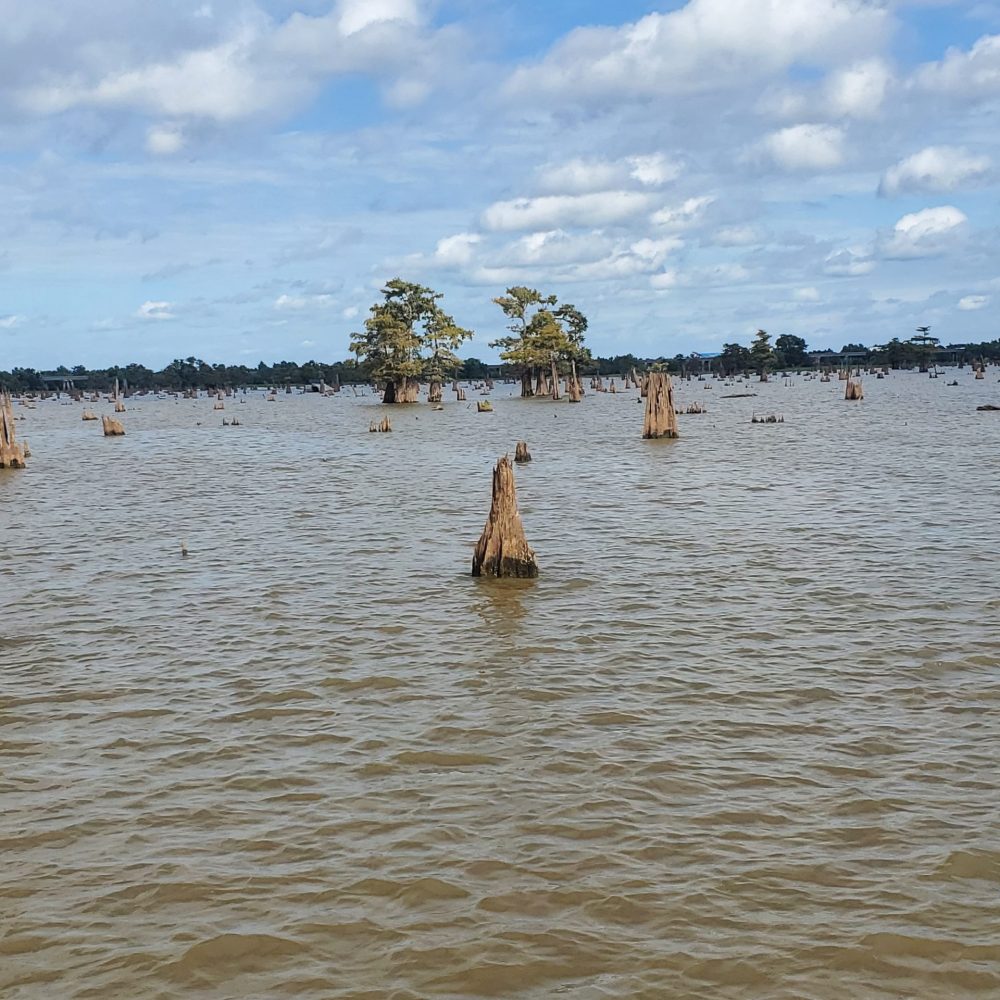
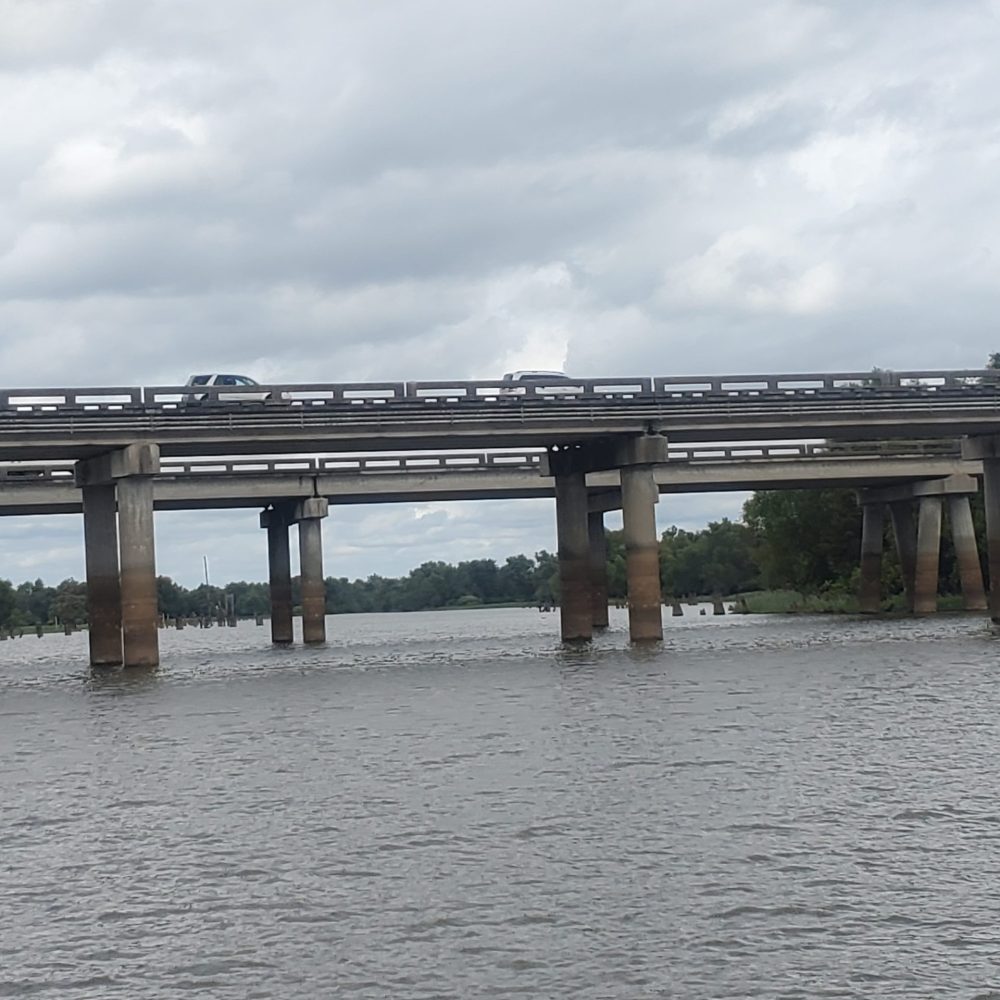
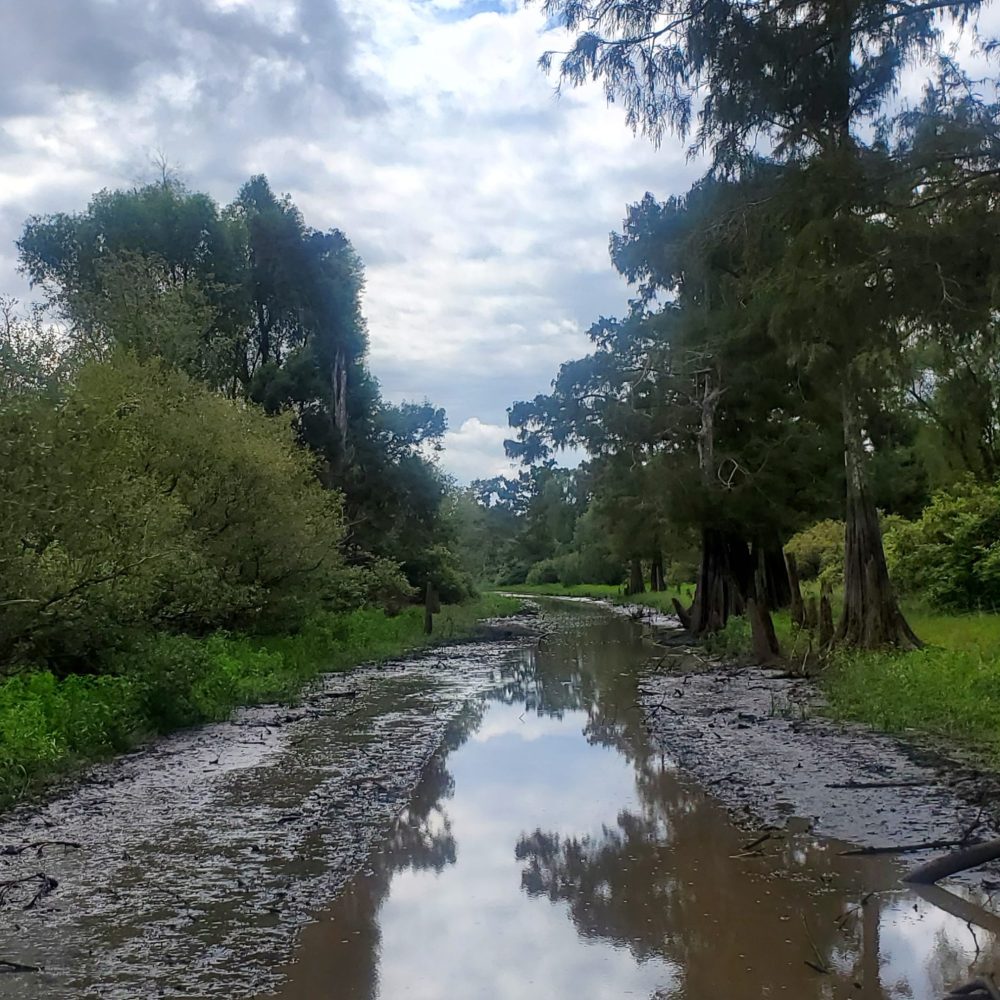
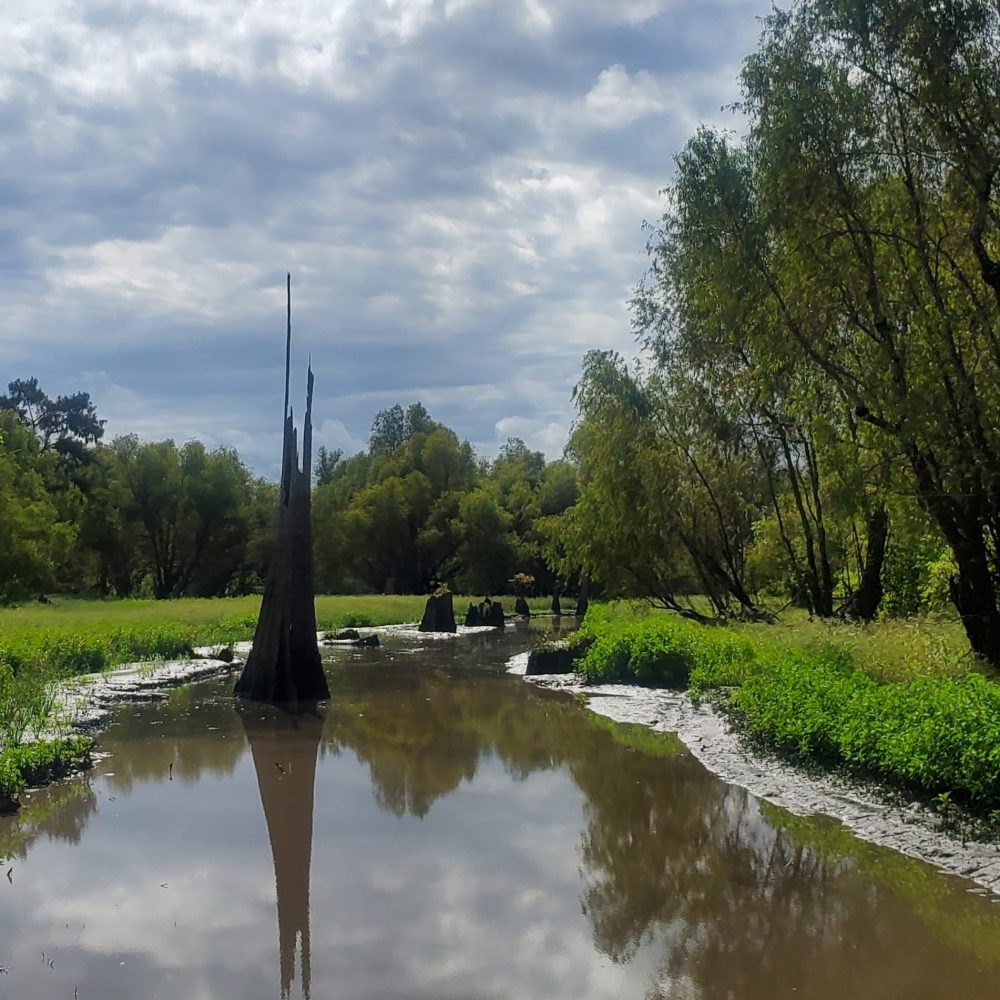
I took a boat tour here and we were able to go under the 18-mile bridge on Interstate 10. This basin is huge, measuring in at 1.4 million acres. As we crossed the basin, you can see stumps of Cypress trees that were harvested a hundred or so years ago. The airboat that we were on was able to slide across wet swamp dirt, allowing us to get into some very backwater areas.
Underneath the 18 mile bridge
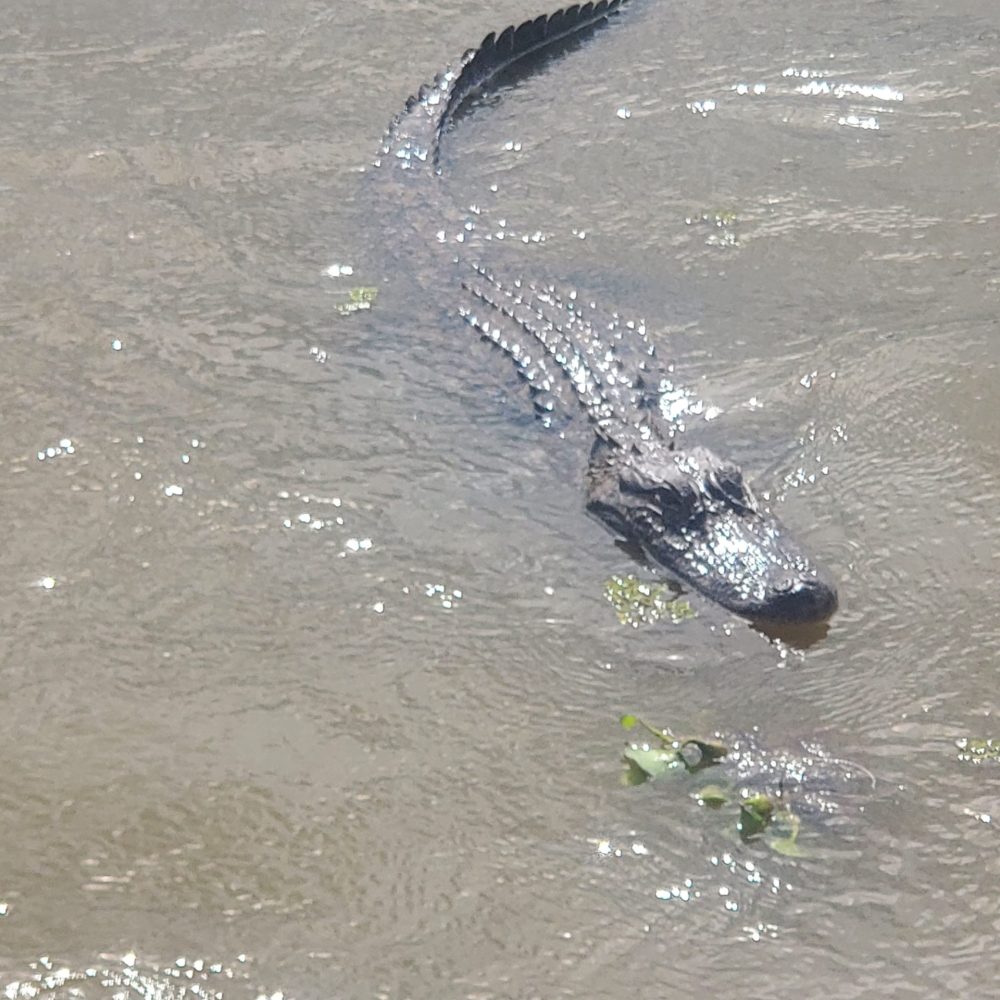
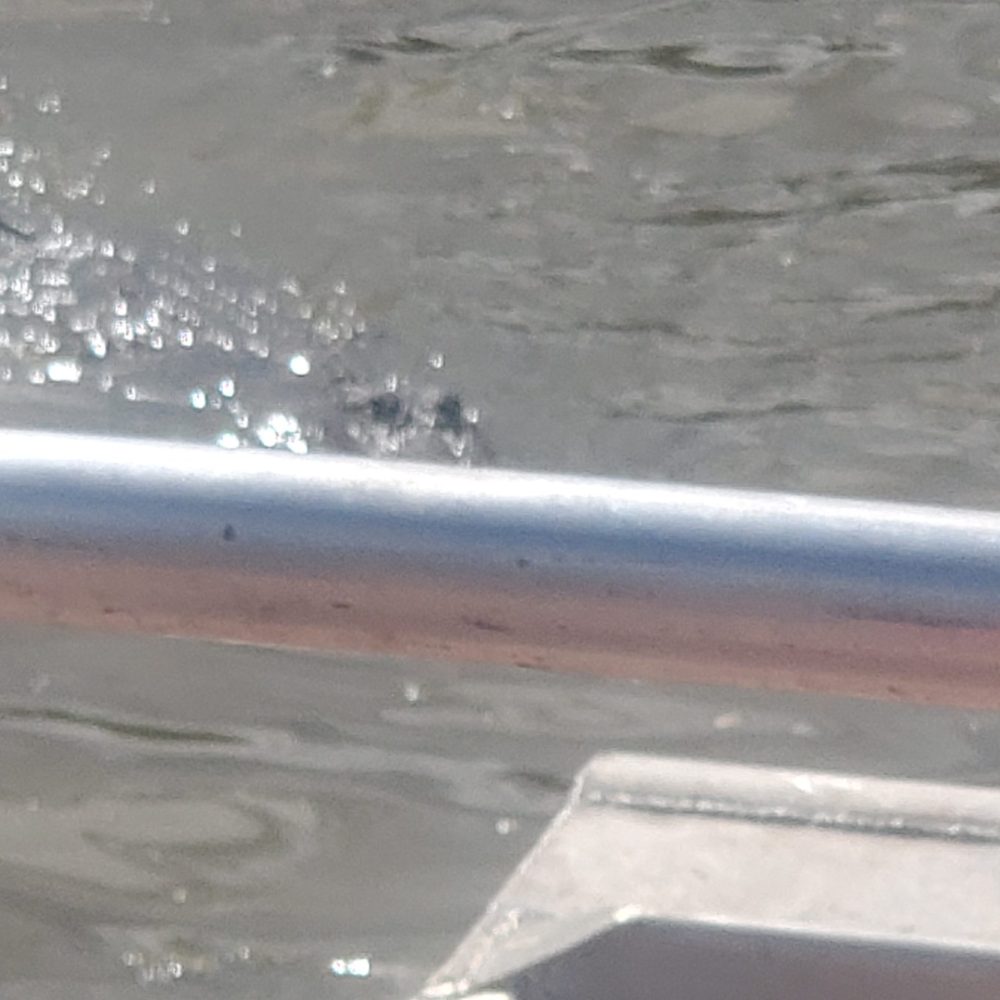
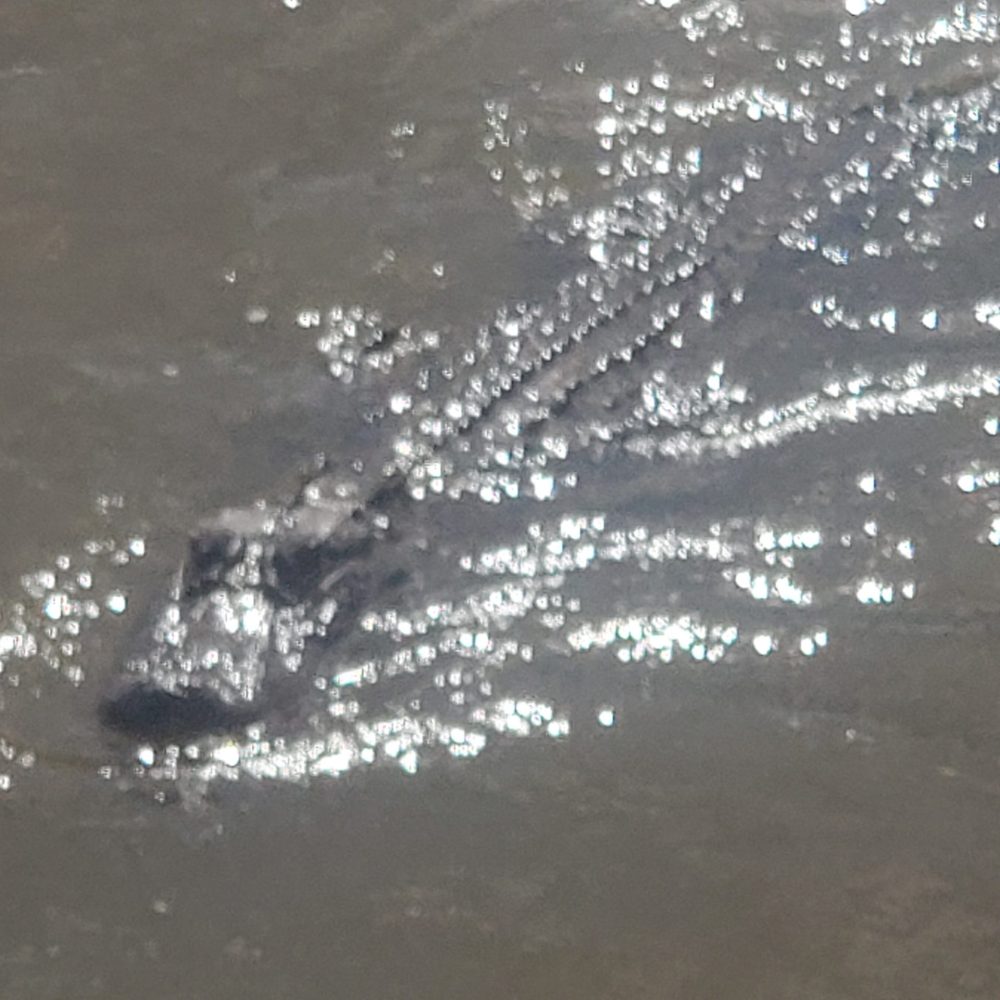
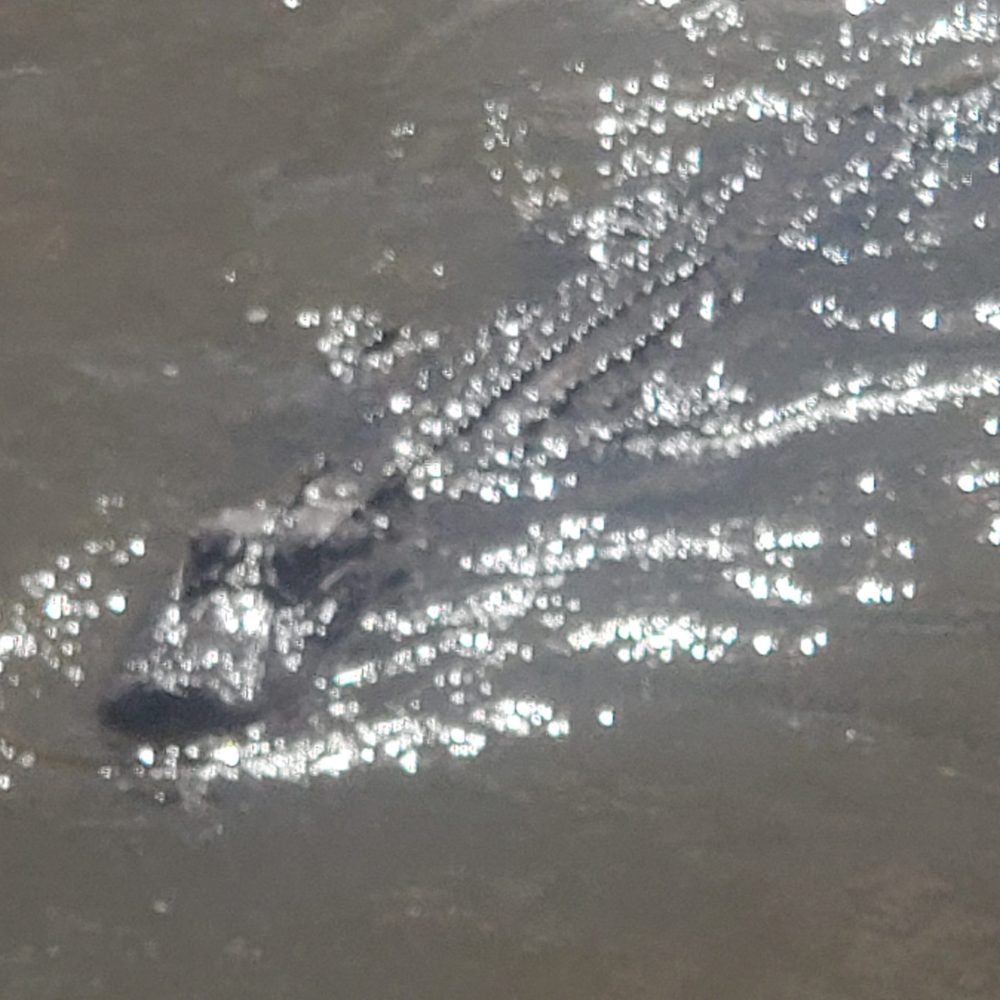 Hungry alligator
Why Both Matter
Bayous and swamps offer significant environmental benefits. They act as “nature’s kidneys” in that they filter water, store massive amount of floodwater and provide habitats for diverse wildlife. They also offer coastal protection often mitigating the impacts of storms and reducing erosion.
The wetlands act as natural sponges, absorbing and holding large amounts of water which defacto reduce the severity of downstream flooding. They also purify and filter the water. They trap pollutants, nutrients and sediments from runoff, improving water quality before it enters lakes, river or oceans.
And if we’re talking about Climate Change, both trap and store significant amounts of carbon in their soil and plant communities. They both serve as breeding, spawning and nursery areas for many fish and shellfish species. Lastly, wetlands help replenish groundwater by allowing water to percolate through the soil.
If you visit:
I highly recommend bringing a DSLR camera along with your cellphone camera, making sure both have fully charged batteries. You will end up taking more photos than you expect. Bring a hat that covers your neck and shoulders and mosquito spray.
I also recommend taking a guided tour. The guides have been guiding for a long time; they know where the baby alligators are, they know where the oyster mushrooms are, they know the lay of the land, and they won’t get lost. Their knowledge of flora is fascinating.
The best time to visit is during Spring (March to May) for maximum wildlife activity and pleasant weather, or Fall (October to November) for cooler, less humid conditions. When I visited in October, we were able to see baby alligators, who had been born a few days prior. We also had excellent bird watching. If your goal is to see baby alligators, the spring and summer in the early morning or late afternoon are the best times.
My thoughts:
I’m so glad I had the opportunity to tour both a bayou and a swamp. Each had their own charm and their own mystique. I would say the swamp was more mystical to me. I could feel a lot of energy there. It was kind of eerie. The bayou was more “alive”.